

How Often Should You Bathe Your Dog? A Complete Vet-Approved Guide

Share
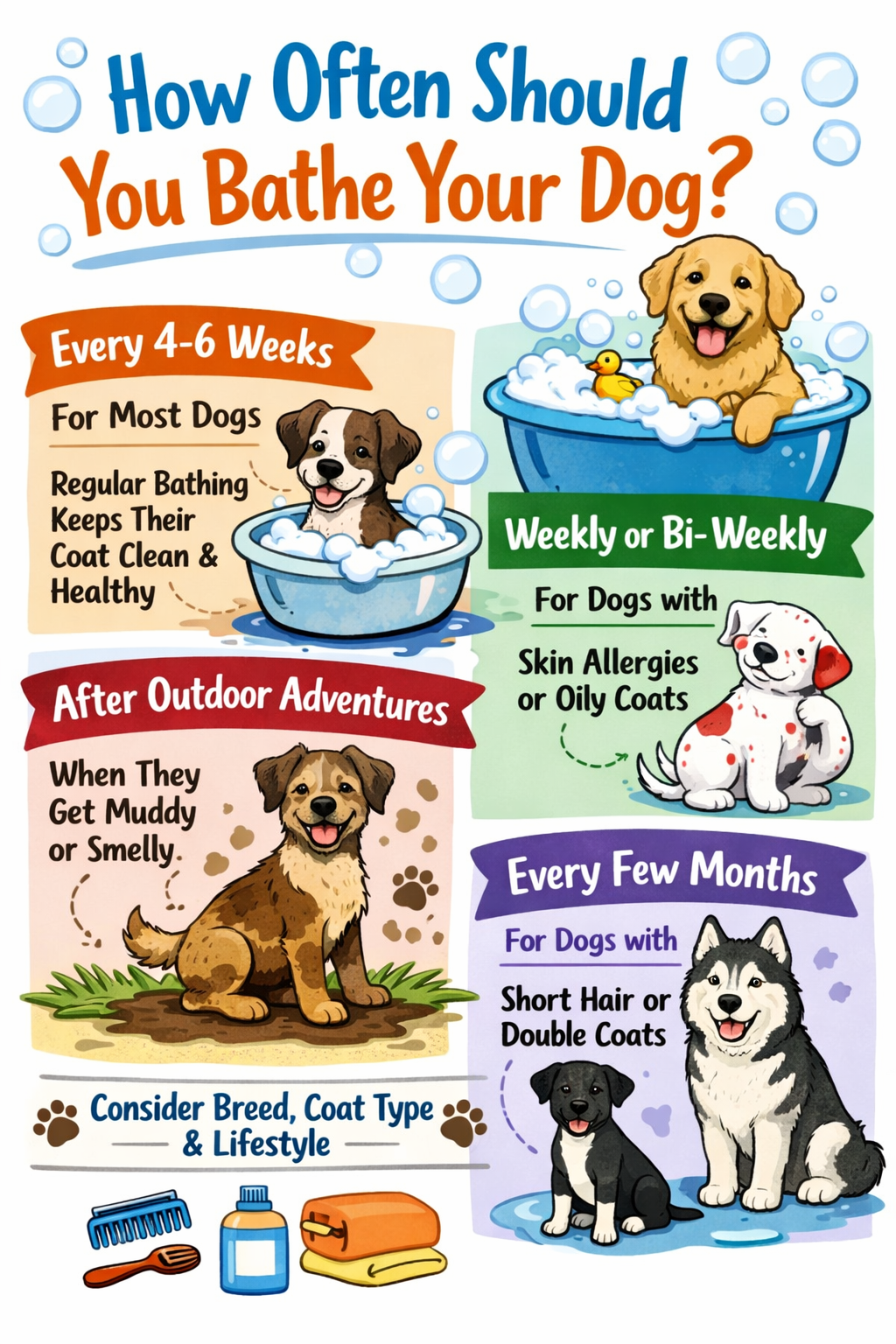
One of the most common questions dog owners ask is: how often should you bathe your dog? The answer isn’t the same for every pup. Bathing frequency depends on your dog’s breed, coat type, activity level, skin health, and even the season. Get it right and you’ll have a healthy, great-smelling dog. Get it wrong — either too often or too rarely — and you could end up with dry, irritated skin or a very smelly companion.
In this complete guide, we cover everything you need to know about bathing your dog — including breed-specific recommendations, signs it’s time for a bath, what happens when you bathe too much or too little, and expert tips straight from veterinary professionals.
How Often Should You Bathe Your Dog? The General Rule
For most healthy dogs with a normal coat and no skin conditions, bathing once every four to six weeks is a solid baseline. This keeps their coat clean, removes allergens and debris, and helps you spot any unusual lumps, bumps, or skin issues before they become serious. According to the American Kennel Club, bathing frequency should always be tailored to the individual dog rather than following a one-size-fits-all schedule.
That said, this general rule comes with a lot of nuance. A Husky and a Basset Hound have very different grooming needs, and treating them the same could cause problems. Let’s break it down by the factors that matter most.
Factors That Determine How Often to Bathe Your Dog
1. Coat Type
- Short, smooth coats (Beagles, Boxers, Dachshunds): A bath every one to three months is usually plenty.
- Long or silky coats (Maltese, Yorkshire Terriers, Collies): Bathing every four to six weeks is recommended, paired with regular brushing.
- Double coats (Golden Retrievers, Huskies, Labrador Retrievers): A bath every six to eight weeks. Over-bathing strips the natural oils that keep the outer coat functional.
- Curly or wavy coats (Poodles, Bichon Frises): Bathing every three to four weeks is ideal.
- Oily coats (Cocker Spaniels, Basset Hounds): Bathing every two to four weeks prevents grease buildup and odor.
- Hairless breeds (Chinese Crested, Xoloitzcuintli): Often need bathing weekly because without a coat to protect their skin, oils and bacteria accumulate rapidly.
2. Activity Level and Lifestyle
An active dog that hikes, swims, or rolls in the mud will need more frequent baths than a calm indoor dog. If your dog loves swimming in lakes or the ocean, rinse them with clean water after each swim to remove salt, chlorine, or algae — even if a full bath isn’t needed every time.
As a rule of thumb: if your dog smells or looks dirty, it’s time for a bath. Active dogs may need bathing every one to two weeks during summer months.
3. Skin Health and Medical Conditions
Dogs with allergies, dermatitis, fungal infections, or other skin conditions often require a specific bathing schedule prescribed by their veterinarian. Medicated shampoos may be part of the treatment plan, and bathing may need to happen more frequently — sometimes weekly. If you notice your dog scratching excessively after baths, it could be linked to a deeper issue — read our guide on whether anxiety can trigger excessive scratching in dogs to learn more.
Dogs with extremely dry or sensitive skin may need less frequent bathing to preserve their natural moisture barrier. Always consult your vet if your dog is experiencing skin issues before changing their bathing routine.
4. Age
Puppies should be bathed sparingly until they have developed a stable immune system. Their skin is more delicate than adult dogs, and over-bathing can disrupt the natural protective layer.
Senior dogs may need gentler, less frequent baths as their skin becomes thinner and more sensitive with age. If a senior dog has trouble standing for long periods, consider using a non-slip mat in the tub and keeping baths short.
5. Season
During summer, dogs tend to get dirtier faster and are more likely to pick up parasites like fleas and ticks. Monthly or even bi-weekly baths during warmer months can be beneficial. In winter, dry air and cold temperatures can make skin more prone to dryness, so reducing bath frequency slightly and using a moisturizing shampoo can help.
How Often to Bathe Your Dog by Breed
Here’s a quick breed-specific bathing guide. For more detailed information on breed-specific skin concerns, PetMD recommends always factoring in your dog’s individual health history alongside breed averages.
| Breed | Recommended Bath Frequency |
|---|---|
| Labrador Retriever | Every 4–8 weeks |
| Golden Retriever | Every 4–6 weeks |
| German Shepherd | Every 6–8 weeks |
| Poodle | Every 3–4 weeks |
| Bulldog | Every 3–4 weeks (clean skin folds weekly) |
| Husky | Every 6–8 weeks |
| Beagle | Every 4–6 weeks |
| Shih Tzu | Every 3–4 weeks |
| Basset Hound | Every 2–4 weeks |
| Chinese Crested (hairless) | Weekly |
| Maltese | Every 2–3 weeks |
| Cocker Spaniel | Every 2–4 weeks |
Signs Your Dog Needs a Bath Right Now
- Strong or unpleasant odor — A mild dog smell is normal, but a strong or sour odor is a clear sign. If the smell persists even after bathing, it could indicate a skin infection — see our article on why your dog smells bad from skin.
- Visible dirt, debris, or matting — Mud, grass, leaves, or tangled fur are obvious cues.
- Excessive scratching or licking — This can indicate dirty or irritated skin. Check out our guide on why dogs itch more at night if the scratching is worse after dark.
- Greasy coat — If your dog’s fur feels oily or stiff, it’s time to clean it.
- Increased shedding — A bath can help loosen and remove excess dead hair.
- After swimming — Salt water, lake water, and pool chemicals should be rinsed off as soon as possible.
What Happens If You Bathe Your Dog Too Often?
Over-bathing is a surprisingly common problem, especially among new dog owners. Bathing your dog too frequently can cause real problems:
- Dry, flaky skin — Natural oils are stripped away faster than they can be replenished.
- Irritation and itching — Dry skin leads to discomfort, scratching, and potential secondary infections.
- Dull, brittle coat — Without adequate natural oils, fur loses its shine and softness.
- Disrupted skin microbiome — Too many baths can throw the healthy bacteria balance on your dog’s skin off, potentially leading to skin infections that may cause fever.
Always use a dog-specific shampoo formulated for their pH level — never human shampoo — and stick to your breed-appropriate bathing schedule.
What Happens If You Don’t Bathe Your Dog Often Enough?
Under-bathing is just as problematic. A dog that isn’t bathed regularly can develop:
- Skin infections — Bacteria and yeast thrive in dirty, oily coat environments. Learn more about how skin problems can cause discoloration in dogs.
- Matting and tangles — Especially in long-haired breeds, lack of bathing makes mats worse and harder to remove.
- Hot spots — Dirty, moist skin is a breeding ground for hot spots. Read our guide on what causes sudden hot spots in dogs to understand the risks.
- Allergen buildup — Dander, pollen, and dust accumulate in the coat and can trigger reactions in both your dog and allergy-prone family members. Our article on stress-related skin problems in pets covers how environmental factors compound these issues.
- Persistent bad odor — An unbathed dog can smell strongly and spread that odor to furniture and bedding.
How to Keep Your Dog Clean Between Baths
You don’t always need a full bath to keep your dog fresh. Here are some effective ways to maintain hygiene between bath days:
- Regular brushing — Removes loose fur, debris, and dead skin cells. Every few days is ideal for most breeds.
- Dry shampoo for dogs — Absorbs excess oil and neutralizes odors between baths.
- Dog grooming wipes — Great for paws, faces, belly, and skin folds after outdoor activities.
- Paw rinses — After muddy walks, rinsing just the paws prevents dirt from spreading through the house.
- Ear cleaning — Wipe the outer ear with a vet-approved cleaner weekly, especially in floppy-eared breeds.
How to Choose the Best Shampoo for Your Dog
- Always use dog-specific shampoo — Human shampoos have a different pH level and can disrupt your dog’s skin barrier.
- For sensitive skin: Look for oatmeal-based or hypoallergenic formulas.
- For oily coats: A clarifying or degreasing shampoo works best.
- For skin conditions: Use only medicated shampoos prescribed or recommended by your vet.
- For puppies: Choose a tear-free, extra-gentle puppy formula.
- Avoid artificial fragrances, parabens, or sulfates — These can irritate sensitive skin.
Step-by-Step: How to Bathe Your Dog at Home
- Brush first — Remove tangles and loose fur before getting your dog wet.
- Prepare everything in advance — Have shampoo, towels, and a non-slip mat ready before you start.
- Use lukewarm water — Test the temperature on your wrist. Too hot or too cold will make your dog anxious.
- Wet thoroughly — Make sure water penetrates all the way to the skin, especially in thick-coated dogs.
- Apply shampoo from neck to tail — Avoid the eyes and ears. Work it into a lather.
- Rinse completely — Shampoo residue is a common cause of skin irritation. Rinse longer than you think necessary.
- Dry properly — Towel dry, then use a low-heat dog dryer if needed. Never leave a dog with a damp coat in cold weather.
- Reward generously — Treats and praise after every bath reinforce positive associations and make future baths easier.
When to See a Vet About Your Dog’s Skin or Coat
Bathing alone won’t solve every problem. According to the American Veterinary Medical Association (AVMA), regular at-home grooming checks are an important part of preventive pet care. Contact your veterinarian if you notice any of the following:
- Persistent bad smell even after a thorough bath — this could indicate a skin infection that needs veterinary attention
- Red, inflamed, or raw patches of skin
- Excessive hair loss or bald spots — possibly linked to chronic skin conditions
- Constant scratching, licking, or chewing at the skin
- Unusual lumps or growths discovered during bath time
- Persistent flaking that doesn’t improve with regular bathing
These could be signs of allergies, fungal or bacterial infections, hormonal imbalances, or parasites — all of which require professional diagnosis and treatment.
Final Thoughts: How Often Should You Bathe Your Dog?
The honest answer is: it depends on your dog. As a general guide:
- Short-haired, low-activity dogs: every 1–3 months
- Most average dogs: every 4–6 weeks
- Long-haired, active, or oily-coated dogs: every 2–4 weeks
- Hairless breeds or dogs with skin conditions: follow your vet’s individual recommendation
The most important thing is to pay attention to your individual dog. A consistent grooming routine — regular brushing, occasional baths, clean ears, and trimmed nails — is the foundation of long-term health and happiness for your pet. When in doubt, your veterinarian is always the best resource for personalized advice.
Have questions about your dog’s grooming routine? Browse more expert pet health guides on Vetpedia — your trusted resource for veterinary-approved pet care advice.



